
Sending gifts and parcels to Germany from the UK
Short answer
Sending parcels to Germany from the UK means German customs, even for a free gift. Parcels from companies aren’t treated as gift shipments, so import VAT of 19% applies to most goods, and since 1 July 2026 low value no longer exempts a parcel from customs duty. Decide who pays before you send, or the recipient will be asked to.
At a glance
Rules last verified 9 October 2026
- Import VAT
- 19% for most goods; 7% for some, such as food and booksSource 1
- Gift relief for company-sent gifts
- No: deliveries from or to companies aren’t “gift shipments”Source 2
- Duty on parcels worth €150 or less
- No relief since 1 July 2026Source 3
- Flat duty on online sales
- €3 per item category, up to €150, until 1 July 2028Source 3
- Who pays by default
- The receiver under DAP; the sender under DDPSource 8
What to do.
- Decide who pays before you send. Under DAP the person receiving the gift is asked to pay the import charges; under DDP the sender settles them first.Source 8
- Value it realistically. For goods you’re not selling, UK guidance says to use the market value, even for a free gift.Source 9
- Send an invoice with the goods. List each item with its description, value and commodity code.Source 9
- Check what you’re sending. Some food is restricted and alcohol needs a full customs declaration. Products that don’t meet EU safety rules, and imitation branding, are restricted too.Source 5Source 11
Sending to people in Germany? We ship DDP, so they have nothing to pay.Start your project
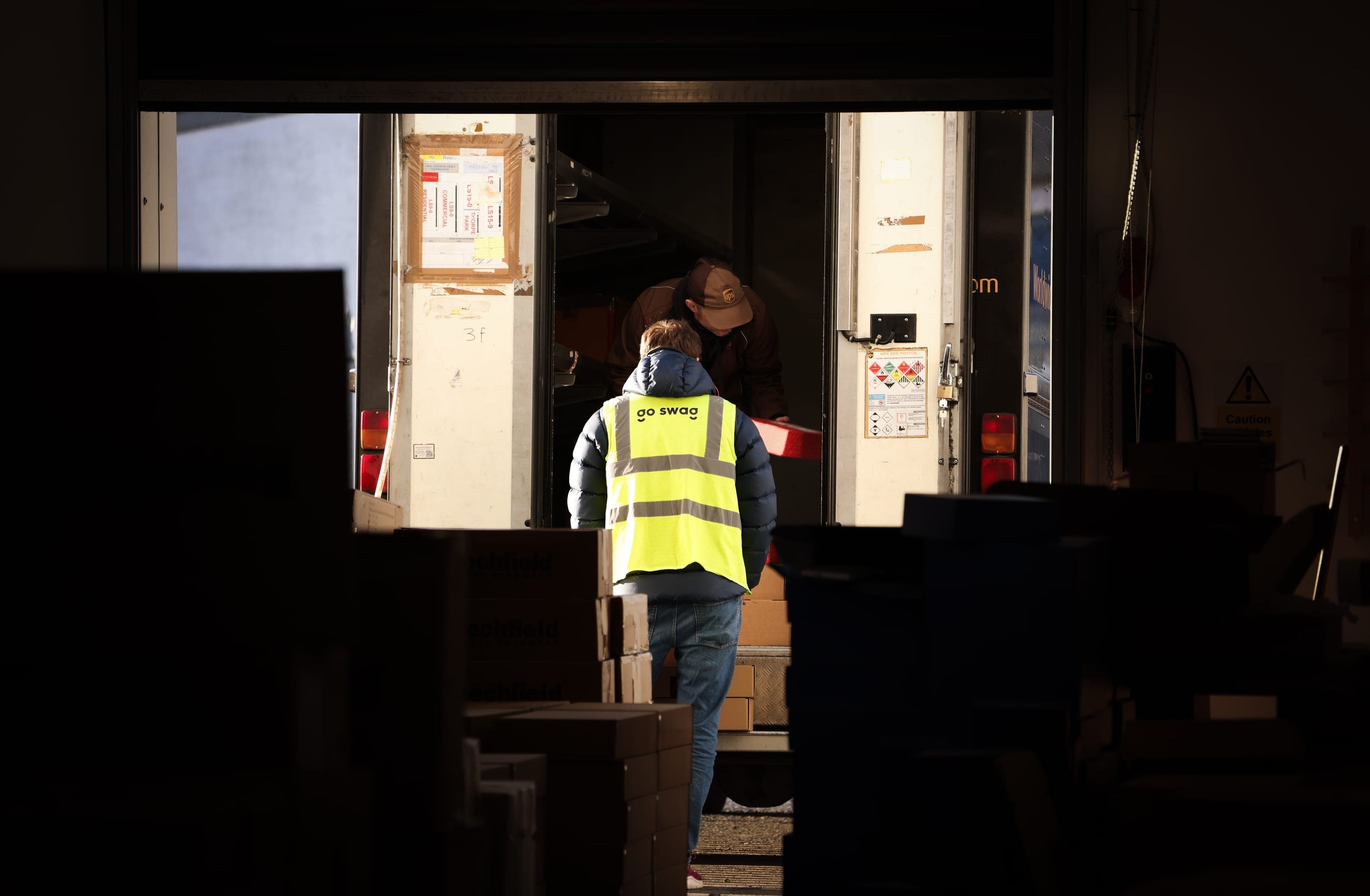
Customs, duty and import tax.
Germany is in the EU, so a parcel from the UK clears EU customs, usually in Germany. German customs is explicit that deliveries from or to companies cannot be recognised as gift shipments, even if they are free of charge. The €45 gift allowance is for parcels between private individuals, not company gifts.Source 2
That leaves two charges to plan for:
- Import VAT. 19% for most goods and 7% for some, such as food and books, worked out on the customs value plus any duty.Source 1
- Customs duty. The €150 duty relief ended on 1 July 2026. Until 1 July 2028, goods worth €150 or less that are sold online to a consumer in the EU pay a flat €3 per item category, however they travel. A company gift isn’t a sale to the person receiving it, so confirm with your carrier or customs broker which duty applies to a gift shipment. UK-made goods can qualify for a reduced rate if the importer claims it.Source 3Source 6Source 7
Who pays: DDP or DAP.
Every company gift from the UK carries import charges. The question is who settles them, and when.
The recipient handles the import and pays before the parcel is handed over. For a gift, that’s the outcome to avoid.
The recipient, at the door (DAP)
- Dispatched from the UK
- Enters the EU
- German customs
- At the doorAsked to pay at the door
The recipient handles the import and pays before the parcel is handed over. For a gift, that’s the outcome to avoid.
The sender, before it ships (DDP)
- Dispatched from the UK
- Enters the EU
- German customs
- At the doorNothing to pay
Everything is settled before delivery. The gift arrives with nothing to pay.
Worked example A company gift valued at €80 owes import VAT at 19% on the €80 plus any customs duty, so under DAP the recipient would be asked for at least €15.20 before the parcel is handed over.Source 1Source 4
An illustration of the rules on this page, not a quote for your parcel.
DDP vs DAP: who pays customs on your gifts?Explore the full service
Paperwork.
- A UK export declaration. Goods leaving Great Britain need an export declaration, the EU included.Source 9
- An invoice that travels with the goods. List each item with its description, value and commodity code, so German customs can classify it.Source 9
- A realistic value, even for free goods. For goods you’re not selling, UK guidance says to use the market value.Source 9
- One line per kind of item. The flat duty counts item categories, not units: five T-shirts are one category (€3), three T-shirts and a watch are two (€6). Group identical products.Source 4
- Proof of origin, where it applies. To get the reduced rate on UK-made goods, the importer needs a valid claim of origin.Source 6
What to send, and what to avoid.
Apparel, notebooks, bottles and bags travel well. Take care with:
- Food and drink. German customs limits food and feed imports, and alcohol is an excise good that needs a full customs declaration.Source 5Source 11
- Products that don’t meet EU safety rules. Products that don’t meet EU safety and compliance rules are among the goods German customs restricts. Check gadgets and anything electrical before you send.Source 11
- Lookalike branding. Counterfeit goods are restricted. Use your own brand, not a famous one.Source 11
Timing: holidays and peak periods.
3 October, the Day of German Unity, is a national public holiday, so allow for it in an autumn send. For Christmas gifts, plan well ahead of December, when parcel networks are at their busiest.Source 12
Gifting etiquette.
- Think long term. The UK government’s Germany guide says German firms often take a longer-term view and value personal relationships highly. A useful, well-made gift fits that better than a novelty.Source 10
- Write the card in German if you can. The same guide calls German the language of business, with fluency a major advantage.Source 10
How Go Swag delivers to Germany.
We deliver to 180+ countries, Germany included. Our stock in the Netherlands serves the whole EU, so wherever we can, swag for German recipients is made, held and sent inside the EU and doesn’t cross a customs border. We ship international orders DDP: we handle customs and duties, so recipients have nothing to pay on arrival. Where a destination’s import rules call for a different arrangement, we handle that too. The cost is worked out up front, in your quote.
Recipients can share their preferences and delivery details on a branded Claim Page, so you don’t need to collect home addresses yourself.
From our work
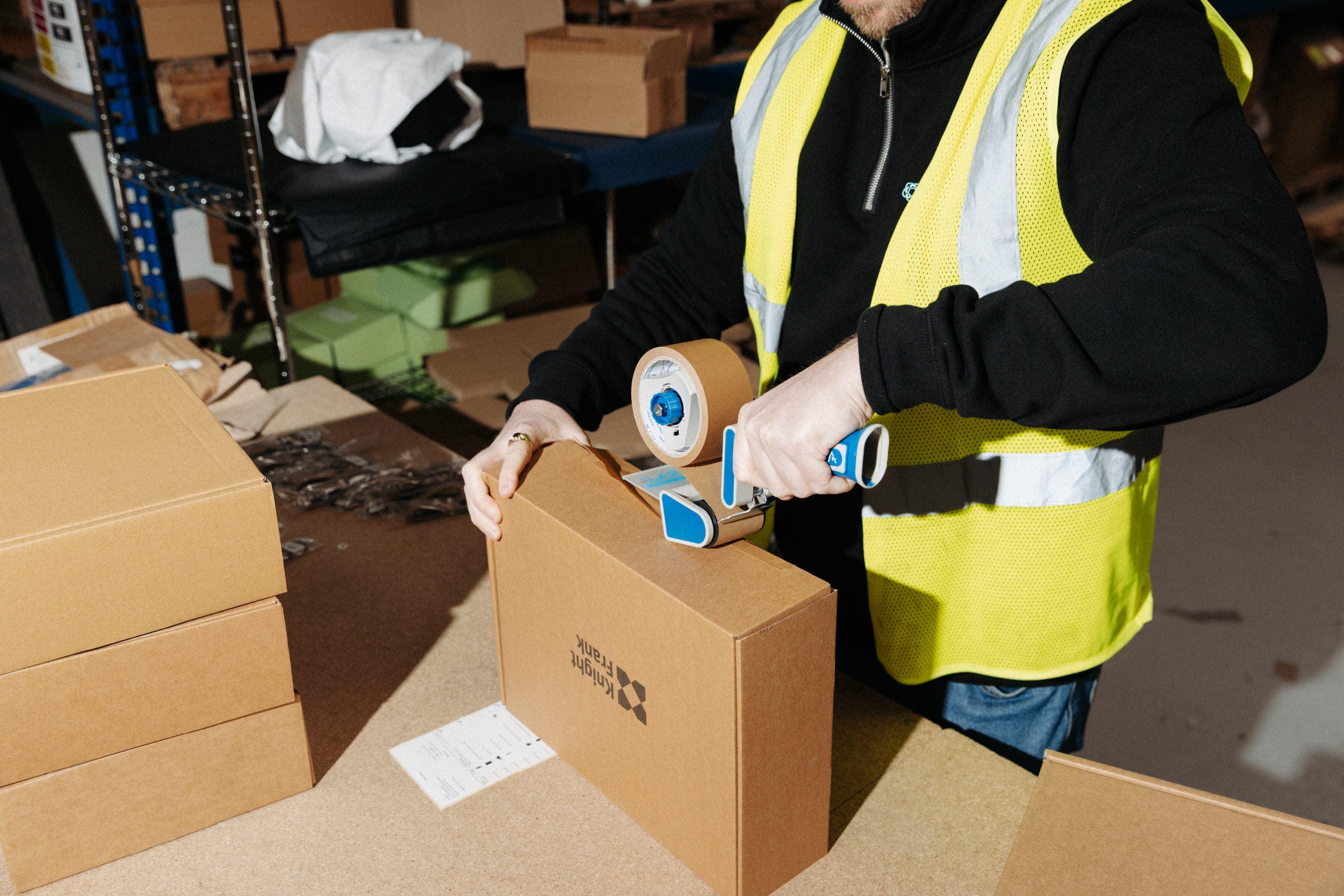
From our work for Knight Frank: a printed kraft box, taped shut and ready to go. A box crossing a border travels with an invoice listing each item and its value, which customs uses to work out duty and import VAT.
Managed
Tell us who’s receiving it in Germany. We’ll plan the route and the costs up front.
Worth knowing
The EU is adding a €2-per-item handling fee on goods sold online to consumers in the EU, expected from 1 November 2026. It pays for customs checks and isn’t a duty. Ask your carrier whether it applies to company gifts.
Source: European Commission, Taxation and Customs Union, “EU Customs Reform”, accessed 9 October 2026. Source 13 · Source: European Commission, “Commission Delegated Regulation of 21.9.2026 supplementing Regulation (EU) 2026/2108 by establishing the amount of the Union handling fee (C(2026) 6694 final)”, accessed 9 October 2026. Source 14 · Source: European Commission, Taxation and Customs Union, “The temporary EUR 3 customs duty and the Union handling fee (guidance)”, accessed 9 October 2026. Source 16
Questions about sending gifts to Germany.
Do you have to pay customs duty on gifts sent to Germany?
On gifts from a company, yes. German customs doesn’t treat them as gift shipments, and since 1 July 2026 there’s no duty relief for low-value parcels. The flat €3 is for goods sold online to consumers in the EU, so ask your carrier or customs broker which duty applies to a company gift. Import VAT comes on top.
Will my employee in Germany have to pay customs?
Only if the charges aren’t settled before delivery. On a DAP send, your employee handles the import and pays the VAT and duty before the parcel is handed over. On a DDP send, the sender pays them first, and the gift arrives with nothing to pay.
Are corporate gifts taxable in Germany?
They can be, for the person receiving them and for the company giving them. Germany has its own payroll and business-gift rules, so check with your German payroll provider or a tax adviser before you send.
Does the €3 duty apply per parcel?
No, per item category. Five identical T-shirts in one order pay €3; three T-shirts and a watch pay €6. It applies only to goods worth €150 or less sold online to a consumer in the EU, however they’re sent.
This guide is general information, not tax, legal or customs advice. Rules change, so check with a qualified adviser before you plan a programme.
Sources
16 sources
- 01Assessment of taxes and duties (opens in a new tab) · Zoll (German customs), accessed 9 October 2026.Back to reference 1
- 02Gifts (opens in a new tab) · Zoll (German customs), accessed 9 October 2026.Back to reference 2
- 03Council Regulation (EU) 2026/382 of 11 February 2026 amending Regulation (EC) No 1186/2009 as regards the elimination of the threshold-based customs duty relief (opens in a new tab) · EUR-Lex, Official Journal of the European Union, accessed 9 October 2026.Back to reference 3
- 04Ensuring fairness and safety: €3 customs duty for low-value parcels (opens in a new tab) · European Commission, accessed 9 October 2026.Back to reference 4
- 05Import process: shipments from a non-EU country (opens in a new tab) · Zoll (German customs), accessed 9 October 2026.Back to reference 5
- 06Proving originating status and claiming a reduced rate of Customs Duty for trade between the UK and EU (opens in a new tab) · GOV.UK (HM Revenue & Customs), accessed 9 October 2026.Back to reference 6
- 07Guidance and legal text on temporary flat fee on low-value imports which will apply until 1 July 2028 (opens in a new tab) · European Commission, Taxation and Customs Union, accessed 9 October 2026.Back to reference 7
- 08DAP & DDP Incoterms® 2020 explained: Key differences (opens in a new tab) · ICC Academy (International Chamber of Commerce), accessed 9 October 2026.Back to reference 8
- 09Export goods from the UK: step by step (opens in a new tab) · GOV.UK, accessed 9 October 2026.Back to reference 9
- 10Exporting guide from the UK to Germany (opens in a new tab) · business.gov.uk (Department for Business and Trade), accessed 9 October 2026.Back to reference 10
- 11Restrictions: goods (opens in a new tab) · Zoll (German customs), accessed 9 October 2026.Back to reference 11
- 12Day of German Unity: facts (opens in a new tab) · deutschland.de (Federal Foreign Office), accessed 9 October 2026.Back to reference 12
- 13EU Customs Reform (opens in a new tab) · European Commission, Taxation and Customs Union, accessed 9 October 2026.Back to reference 13
- 14Commission Delegated Regulation of 21.9.2026 supplementing Regulation (EU) 2026/2108 by establishing the amount of the Union handling fee (C(2026) 6694 final) (opens in a new tab) · European Commission, accessed 9 October 2026.Back to reference 14
- 15Commission Delegated Regulation (EU) 2026/1022 amending Delegated Regulation (EU) 2015/2446 as regards definitions, customs declarations and data elements related to the temporary EUR 3 customs duty on distance sales of imported goods in a consignment with an intrinsic value not exceeding EUR 150 (opens in a new tab) · EUR-Lex, Official Journal of the European Union, accessed 9 October 2026.Back to reference 15
- 16The temporary EUR 3 customs duty and the Union handling fee (guidance) (opens in a new tab) · European Commission, Taxation and Customs Union, accessed 9 October 2026.Back to reference 16

Want us to handle it?
Tell us who you are sending to and what you have in mind. We’ll help connect the products, the packaging and the delivery plan.
Or call 0800 118 4047 or email hello@goswag.com.