
Debossing: how it works and when to use it
Short answer
Debossing presses your logo into a surface with a heated metal die, so it sits below the material as a clean, sunken mark. With no ink, it’s quiet, tactile and hard to wear away. It suits notebook covers, leather and PU goods, and card. Fine detail, bright colour and fabric are better served by foil, print or embroidery.
Technique
- Best for
- Notebook covers, leather and PU goods, card
- Limits
- Fine detail, colour, fabric, hard plastics
- Artwork
- Vector file with bold, simple shapes
- Finish
- Tonal by default; add foil for colour
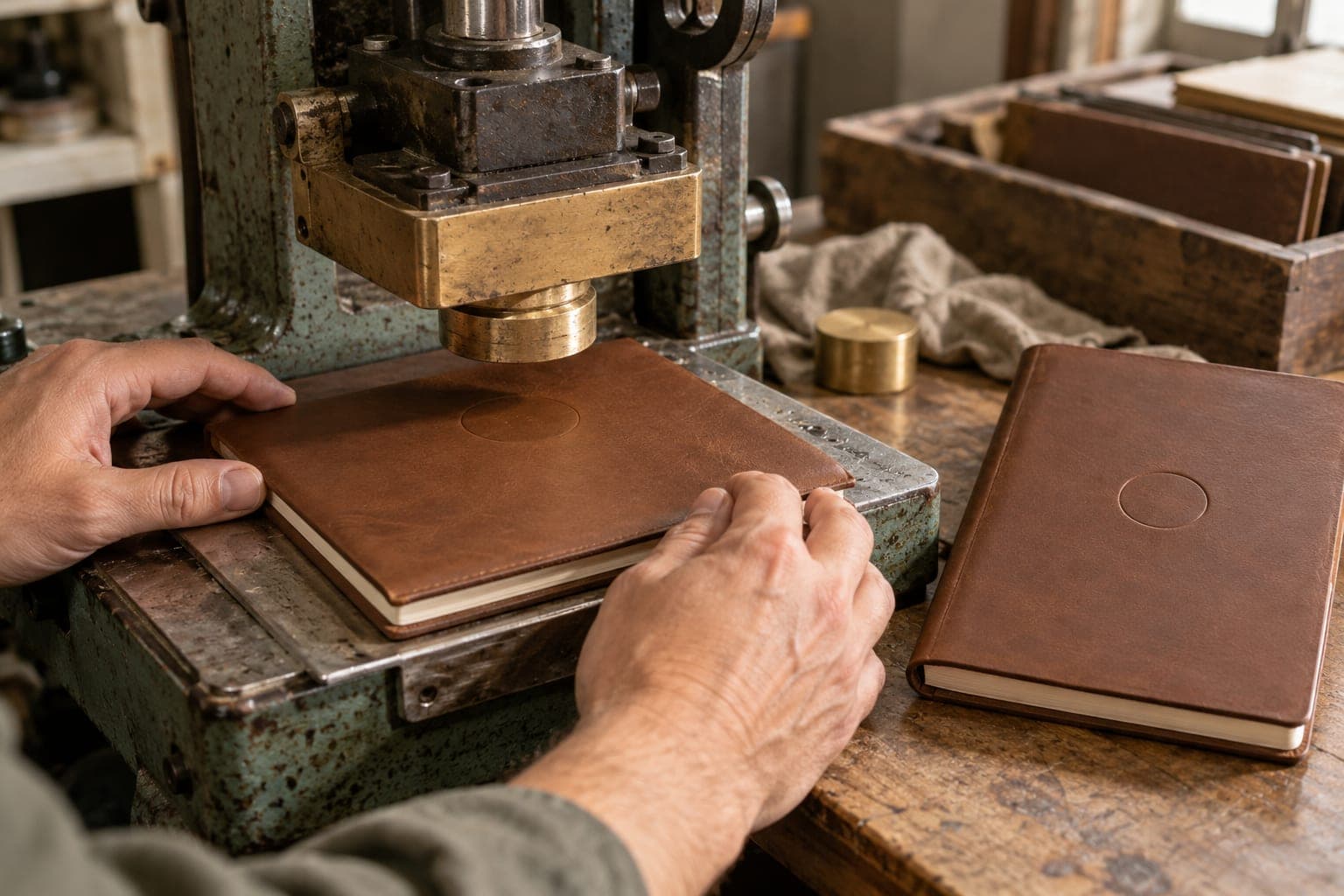
How debossing works.
Making the die
Your logo is etched or engraved into a metal die, usually magnesium, copper or brass. The die is a one-off tool for your design and size, and it can be reused for a repeat order.
Setting the depth and heat
The die is mounted in a press and heated. Heat and pressure are set to suit the material: leather and PU behave differently from card.
Pressing
The press brings the hot die down onto the cover, pushing the logo below the surface. On paper and card, a matching counter die can be used behind the sheet.
Adding colour, if you want it
Left plain, it’s a blind deboss: the logo shows as shadow and texture in the material’s own colour. Foil can be pressed into the same shape for a gold, silver or coloured finish.
Checking the result
Finished pieces are checked for an even depth and clean edges.
Where debossing works best.
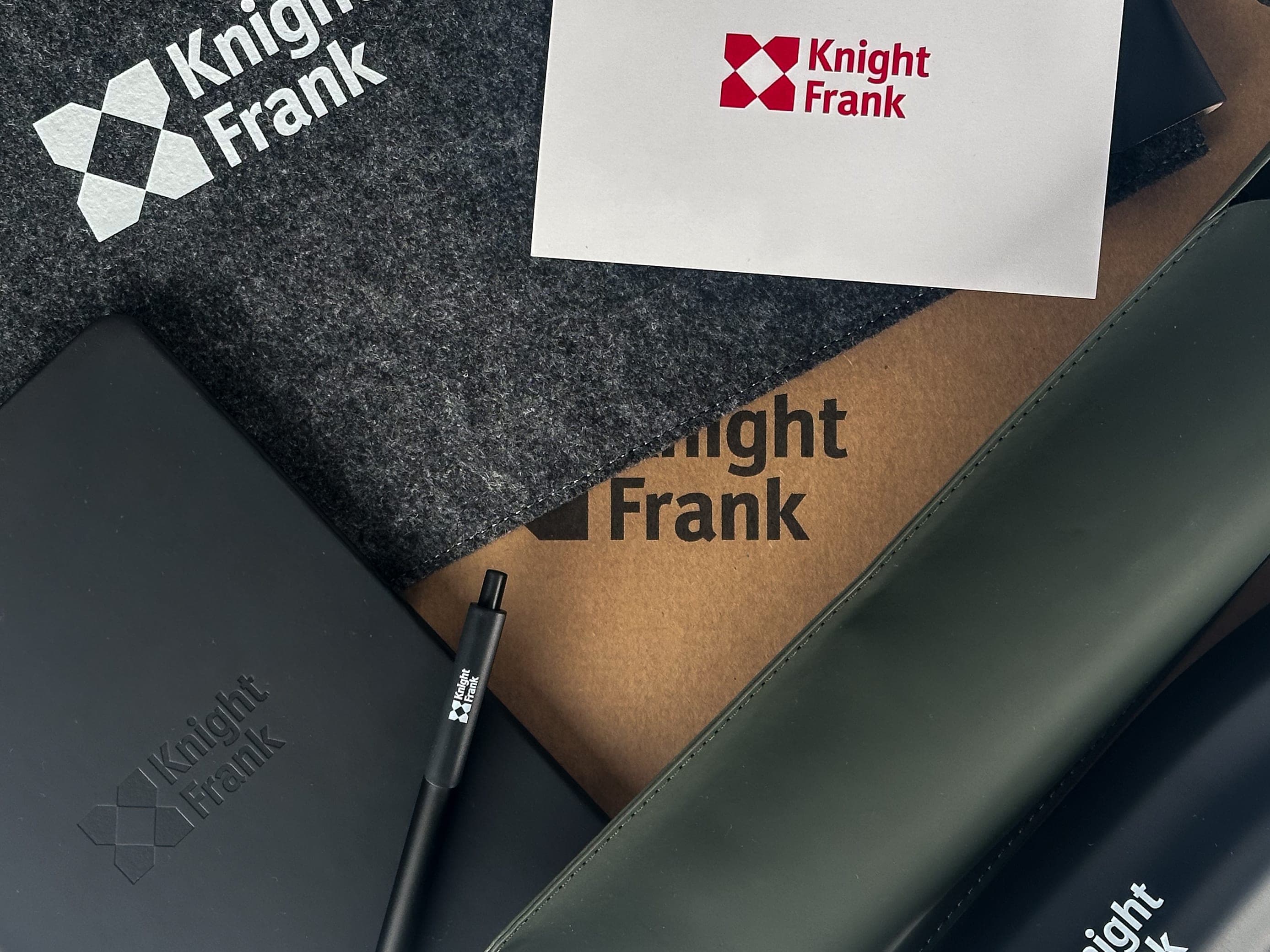
Knight Frank · Debossed notebook with a recycled felt sleeve Notebook covers
The classic use. A tonal logo on a black or coloured cover looks considered rather than printed. Knight Frank’s black notebooks carry a tonal debossed logo with no ink, just the mark pressed into the cover.
Branded notebooks
Leather and PU goods
Wallets, card holders, luggage tags, journals and padfolios take a deep, clean impression with heat and pressure.
Card and packaging
Boxes, sleeves and cards can be debossed or embossed, with or without foil, for a finish people notice when they touch it.
Custom mailer boxesGifts that need to feel premium
With no ink, the branding stays quiet. It suits client and leadership gifts, where a loud logo would feel out of place.
Where it has limits.
Fine detail and small text. The die’s edges are bevelled, so thin lines and small letters soften or fill in. Simplify the logo, or choose pad printing or foil for the detail.
Bright, accurate colour. A blind deboss has no colour of its own. If the logo must show in brand colours, add foil or print it instead.
A raised finish. Debossing sinks the logo. If you want it to stand up from the surface, that’s embossing, which needs a different die set and a thicker, more pliable material.
Fabric and clothing. Most garments don’t hold a pressed shape. Use embroidery or a patch, which can itself be debossed.
Hard plastic, metal and glass. These don’t take a pressed impression in the same way. Pad printing or laser engraving suits them better.
Artwork that works.
- Send a vector file
- AI, EPS, SVG or PDF, in one colour, with the text converted to outlines.
- Keep lines bold
- The foil and embossing trade body suggests lines of 2 pt (about 0.7 mm) or more on paper, because thinner lines are hard to press cleanly.
- Give it room
- Make the logo slightly bigger and heavier than you would for print, with a little more space between letters.
- Mind the edges and folds
- Keep the logo clear of the cover’s edges, seams and any fold or hinge.
- Say blind or foil
- Tell us whether you want a plain deboss or a foil colour in the impression.
These are typical industry figures, not fixed limits. We confirm the specification for every order.
What affects the cost.
- The die
- A one-off tool for each design and size. Reorders can reuse it.
- Die material and detail
- Magnesium is the economical choice for shorter runs; brass costs more and lasts much longer. Multi-level and sculpted dies cost more to make.
- Foil
- A foil-filled deboss adds foil and a second step.
- Size and position
- A larger logo, or a logo on the front and the back, needs a bigger die or a second pressing.
- Quantity
- The die cost is shared across the run, so it matters less as the order grows.
Need help getting the artwork ready?Design & artwork
Care and durability.
There’s no ink to fade or rub off.
Care for debossed covers
- Wipe leather and PU covers with a dry or slightly damp cloth.
- Keep covers away from direct heat.
- Follow the maker’s care advice for leather.
Variations worth knowing.
Blind deboss. No colour or foil, just the shape pressed into the material. The most understated finish.
Foil-filled deboss. Foil pressed into the impression, in gold, silver or a colour, so the logo is sunken and coloured at once.
Multi-level and sculpted. A die with several depths, or smooth sculpted shapes, for a logo with more dimension. It takes a more detailed die.
Worth knowing
Die choice follows the run length: according to the Foil & Specialty Effects Association, magnesium dies suit around 1,000–5,000 impressions on paper, copper dies 50,000–100,000, and brass dies more than one million.
Source: Foil & Specialty Effects Association (hosted by Kluge), “The designer’s guide to foil stamping and embossing”, accessed 6 October 2026.
Managed
Planning notebooks or leather gifts with a debossed logo? Tell us who they’re for.
Planning something bespoke? Explore Studio
Questions about debossing.
What is debossing?
Debossing is a way of branding a product by pressing a design into its surface with a heated metal die, so the design sits lower than the material around it. It needs no ink. It’s most common on notebook covers, leather goods and card.
Can you deboss leather?
Yes. Leather and PU take debossing well. A heated die presses the logo into the material, and die makers use deeper dies for leather so the material has room and doesn’t scorch. It’s used on wallets, journals, luggage tags and notebook covers.
What is the difference between debossed and embossed?
Debossed is pressed in; embossed is raised up. Both use a metal die and pressure. Embossing needs a matching counter die and a thicker material that can stretch into the raised shape, so debossing is the more common choice for notebook covers and leather.

Want us to handle it?
Tell us who you are sending to and what you have in mind. We’ll help connect the products, the packaging and the delivery plan.
Or call 0800 118 4047 or email hello@goswag.com.